

Smart Energy Solutions for Africa
Innovations for sustainable energy supply in Africa
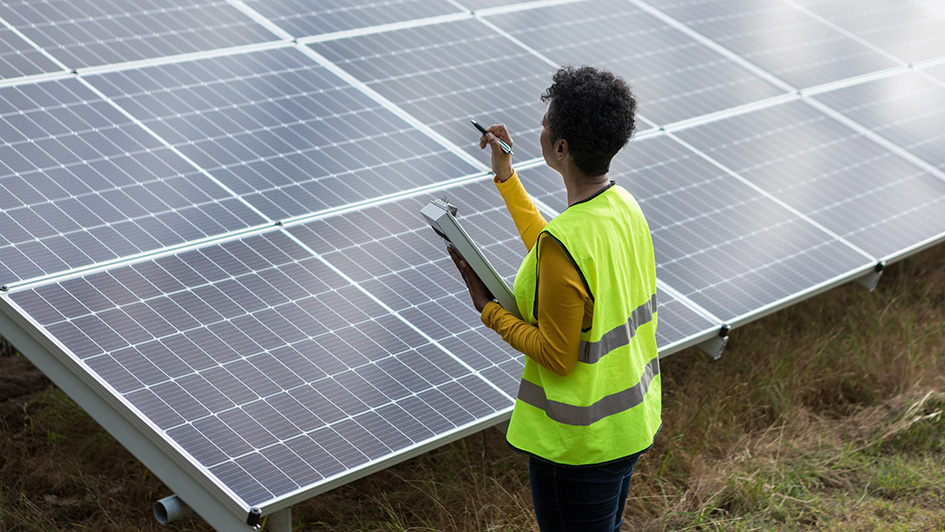
The African continent faces a variety of challenges in the energy sector: Large parts of the population still do not have access to an affordable and reliable energy supply, and these needs will continue to increase in the coming years due to population growth and economic development. This is where the consortium SESA, comes in: A collaborative project between the European Union and nine African countries to improve energy access for vulnerable groups, promote ecological change and drive economic development.
ConsortiumWorking together for innovative energy solutions
To implement the European Green Deal in partnership with African countries, the Smart Energy Solutions for Africa (SESA) brought a diverse consortium of 30 partners, African and European universities, research centers, industry players, local governments, knowledge and implementation organizations and networks together – including Siemens Stiftung and Kenyan social enterprise WeTu, to promote innovative energy solutions. With a strong focus on replicating and scaling locally developed solutions, the project joined forces with SMEs and entrepreneurs to support sustainable economic development in Africa.
Webinar on Entrepreneurial Lessons from Africa’s Smart Energy Sector
Siemens Stiftung, ICLEI Europe, and the UNEP Copenhagen Climate Centre will host the webinar, “From Pilots to Pathways: Entrepreneurial Lessons from Africa’s Smart Energy Sector” on October 15, 2026, for entrepreneurs and organizations from Africa’s energy sector.
SESA Impact Indicators
29
Partners
19
Use Cases
9
African Countries
207
Applicants received
200
Direct Jobs
30 %
more customers
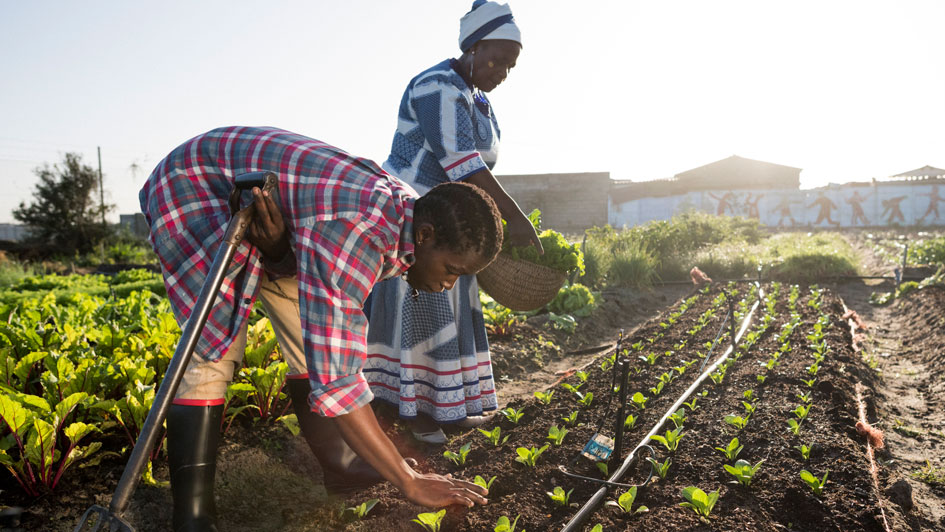
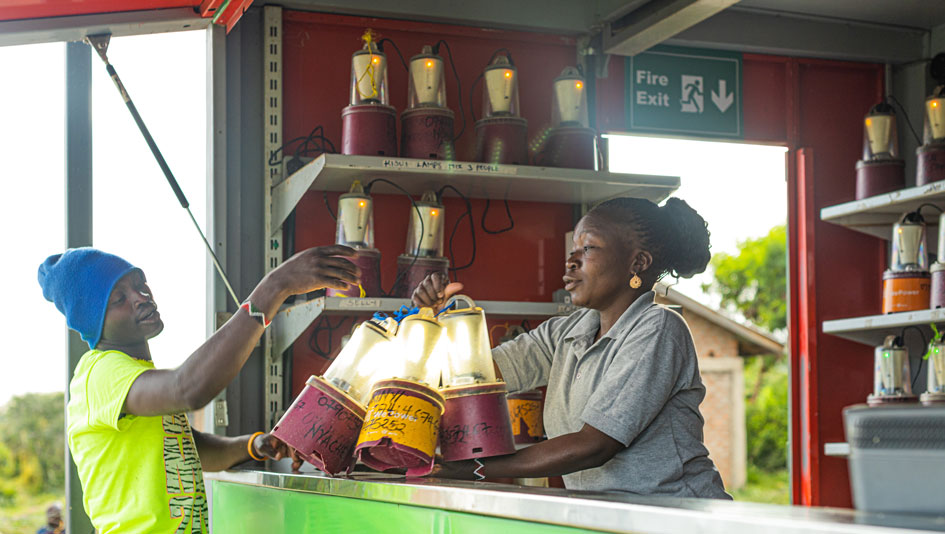
The SESA project has advanced a wide portfolio of innovative energy solutions for productive use, including photovoltaic and solar systems, innovative energy storage, battery recycling for electromobility, and rural internet connectivity. These innovations were developed, tested, and piloted under real-world conditions at “Demonstration Sites” in Kenya, led by Siemens Stiftung’s social enterprise WeTu, which serves fishing communities with integrated sustainable energy and water solutions along the Lake Victoria region.
SESA expanded its impact through “Validation Sites” in Ghana, Malawi, South Africa, and Morocco, where local entrepreneurs adapted and validated technologies and business models to meet the needs of low-income communities. Subsequently, “Replication Sites” in Namibia, Nigeria, Rwanda, and Tanzania enabled the large-scale replication and scaling of the most promising solutions, demonstrating their viability across diverse socio-economic and political contexts.
A core success factor of SESA has been its strong multi-stakeholder collaboration. Local authorities and companies were involved in the joint development process. Through peer learning, capacity building, and exchange programs, institutions and enterprises strengthened their capabilities to implement, adapt, and scale solutions. Comprehensive technology and training packages were developed and made freely available through an online toolbox, supporting the dissemination and replication of SESA innovations across Africa.
SESA Incubator for Social Entrepreneurs

SESA Call for Entrepreneurs 2023
SESA Call for Entrepreneurs 2022
Members of the consortium:
F6S Innovation, Green Energy Park, Going Green, Leitat, Make It Green, Metanogenia, Siemens Stiftung, Cenex Nederland, WeTu, ICLEI, UN Environment Programme, UNEP DTU Partnership, Urban Electric Mobility Initiative (UEMI), UN-Habitat, Aamusted, uYilo eMobility Programme, Namibia University of Science and Technology (NUST), Smart Innovation Norway, Blekinge Institute of Technology (BTH), TECNALIA, The University of Rwanda (UR), Wuppertal Institut, Basic Internet Foundation und Elico Foundation.
ContactWould you like to find out more? Do you have any questions?
Project Manager, Siemens Stiftung
Elisabeth Biber
elisabeth.biber@siemens-stiftung.org
Publications
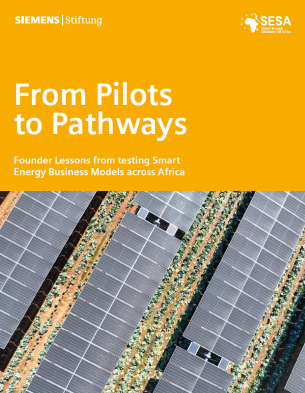
From Pilots to Pathways: Founder Lessons from testing Smart Energy Business Models across Africa
Over four years, social enterprises and innovation partners participating in the SESA project tested and refined smart energy solutions across sectors including agriculture, cold storage, clean cooking, and e-mobility. Siemens Stiftung presents a new publication, highlighting recurring patterns that emerged across different technologies, business models, and markets.


