


arrice
Young people need more than climate awareness – they need the skills to act. ARRICE (African Regional Resilience Initiative on Climate Education) strengthens Climate Change Education in Kenya, Senegal, and Mauritius by empowering teachers, supporting schools, and embedding climate learning into formal education systems.
Together with local and international partners, ARRICE helps build resilient communities through education and pave the way to a sustainable future.
ARRICE is a regional initiative for Climate Change Education (CCE) in Africa coordinated by the Office for Climate Education (OCE), together with partners including Siemens Stiftung.
It is based on one simple conviction:
Climate change already affects everyday life across many parts of Africa. Droughts, floods, biodiversity loss, and food insecurity shape how young people live, learn, and plan for the future. At the same time, many schools still lack trained teachers, climate-related learning materials, and institutional support for Climate Change Education to address this important topic in ways that are meaningful for learners. ARRICE addresses this gap by strengthening Climate Change Education in formal school systems.
ARRICE supports teachers, schools, and education systems to foster climate related education through:
By connecting climate science with local realities and everyday learning, ARRICE helps young people to:
The initiative is designed as a multi country program implemented in Kenya, Senegal, and Mauritius, enabling regional learning and scalability while remaining deeply anchored in national education contexts.
The initiative follows a bottom-up, context-sensitive, and research-based approach. Innovations are first tested in pilot schools and classrooms before being scaled into national frameworks through a pilot-to-policy model that supports relevance, credibility, cost-efficiency, and long-term sustainability.
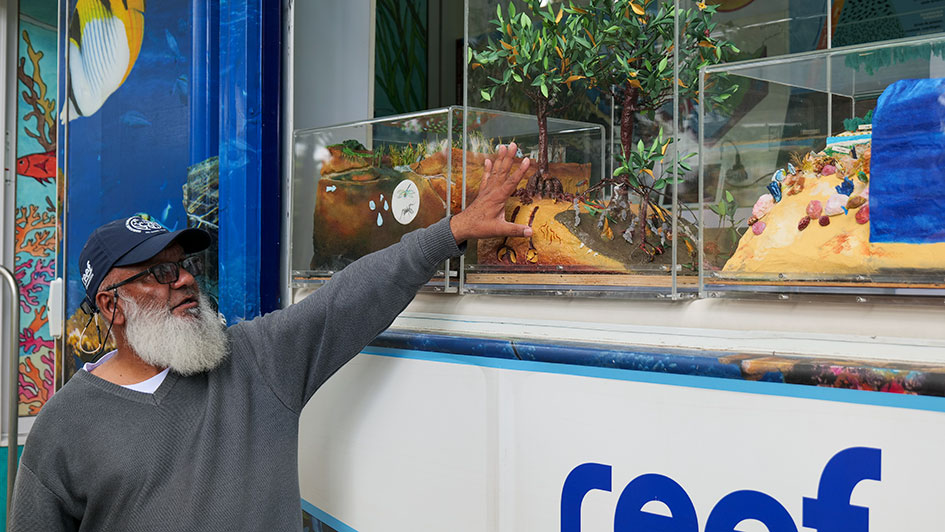
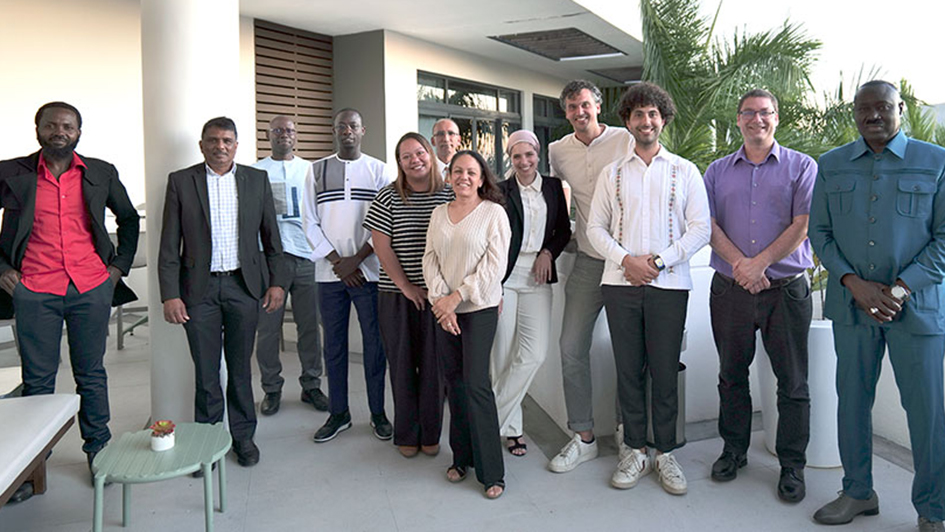
ARRICE is coordinated by the international Office for Climate Education (OCE), with support from Siemens Stiftung and the Fonds Français pour l’Environnement Mondial (FFEM), in partnership with organizations including KOEE, ENDA, MIE, and Reef Conservation.
Siemens Stiftung supports the ARRICE initiative across the region with:
In addition to supporting ARRICE at regional level, Siemens Stiftung works closely with KOEE, the Kenyan Ministry of Education, and the Kenya Institute of Curriculum Development to support the integration of Climate Change Education into Kenya’s new competency-based curriculum.
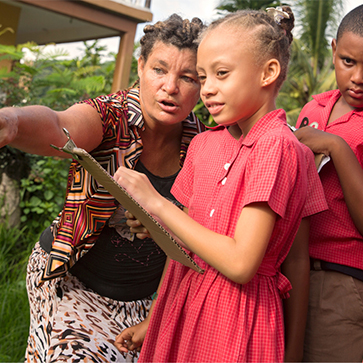
At school and community level, Siemens Stiftung supports hands-on educational projects that connect climate science with local realities and everyday life. Through learner-centred approaches, teachers and young people develop practical solutions and take action within their communities.
Project lead ARRICE at Siemens Stiftung
Badin Borde
badin.borde@siemens-stiftung.org
Project lead ARRICE in Kenya
Rebecca Ottmann
rebecca.ottmann@siemens-stiftung.org


Our newsletter keeps you informed about our work in the action areas of Essential Services, Digitality, and Climate.
Every two to three months, you’ll receive updates on important topics, projects, calls for proposals, training opportunities, and events.
Our newsletter keeps you informed about our work in the areas of primary care, digitalization, and climate.
Every two to three months, you’ll receive updates on important topics, projects, calls for proposals, training opportunities, and events.