
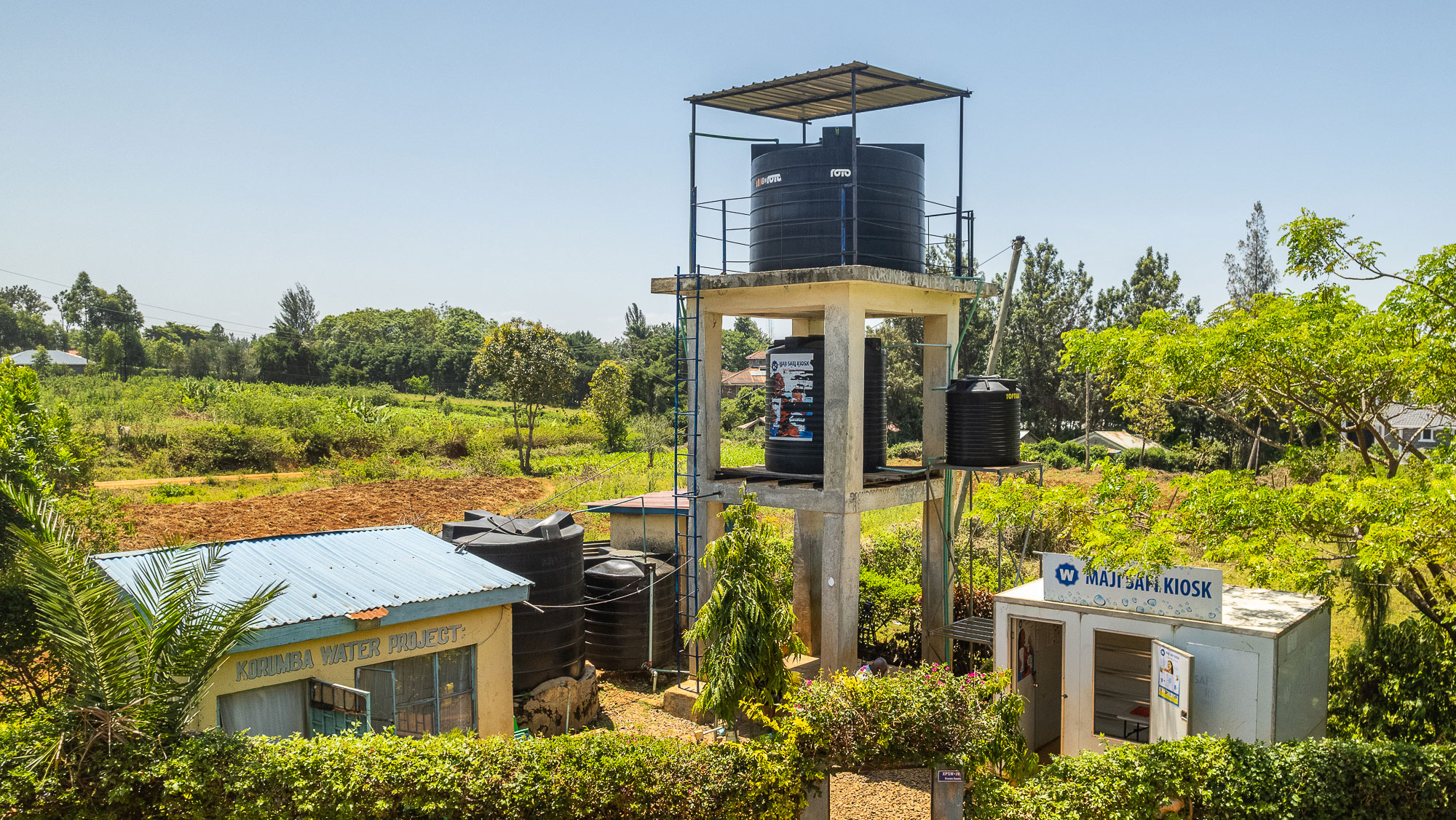
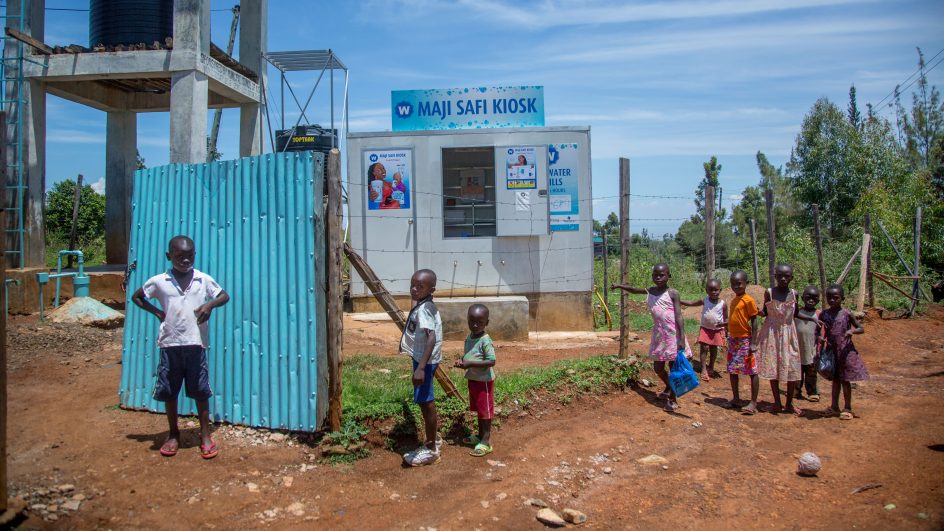
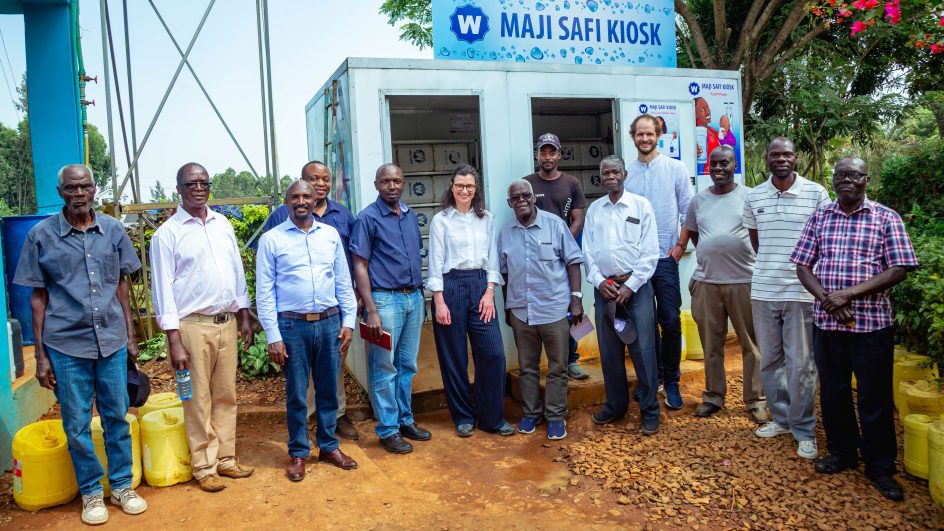


The Safe Water Enterprise opens up new possibilities in Korumba.
© Siemens Stiftung
More than 8.5 million liters of clean drinking water, no cases of cholera in a decade, and new opportunities for women and families: Korumba, a rural community in western Kenya, shows what is possible when communities, social enterprises, philanthropic and public institutions work together – building a sustainable system.
2015, something has changed in Korumba. Safe water was suddenly within walking distance. Fewer and fewer villagers relied on sources such as contaminated river water and the cholera statistics dropped to zero. Women and girls, who previously had to walk long distances to fetch water, gained time for education and paid work. How did this happen?
It all started with a community-based organization (CBO) following a clear goal: To establish a long-term water supply. Experience shows that many well projects fail after a few years because they are set up as one-time projects. Things were supposed to be different in Korumba.
How to achieve a sustainable water supply is also a question the Siemens Stiftung asks itself. We view water supply as an interconnected system. Therefore, we combine technology, social entrepreneurship, local capacity development and partnerships with public institutions to strengthen reliable, sustainable and climate-resilient water services over the long term.
«The aim is not to make a profit, but to generate just enough revenue to cover small repairs, operating costs and day-to-day maintenance – while keeping responsibility in the hands of the community.»
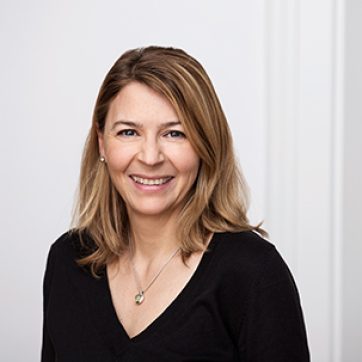
Christine Meinhardt, Project Manager Safe Water Enterprises, Siemens Stiftung
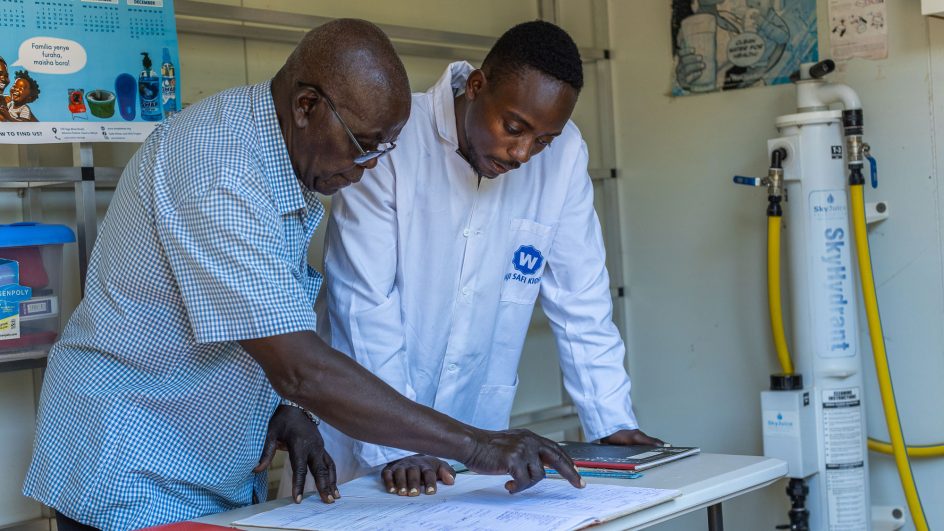
To ensure this, a Water Users Association (WUA) has emerged from the CBO, operating under the Kenyan law. The WUA oversees the Safe Water Enterprise and guarantees transparency and trustworthiness. Day-to-day operations are handled by trained staff, creating new income opportunities in Korumba. The partner SkyJuice foundation provides mobile off-grid filters that clear water using hair-thin membrane fibers.
The project is a success, and demand is high. At the same time, however, climate change poses an ever-greater challenge to water projects, and the population in Korumba is growing. Especially during the dry months, the well water is no longer sufficient, and rainfall is becoming increasingly unpredictable.
It’s clear: To meet the demand, the Safe Water Enterprise must expand. Together with the Siemens Foundation and a new partner, the Kenyan social enterprise Rural Water Management Solutions (RWMS), the community of Korumba has upgraded a nearby water source and established a second water kiosk.
RWMS has significantly improved water services by installing water ATMs, upgrading monitoring systems, and introducing a billing system. Together with Korumba’s WUA, they are also strengthening the management, operation, and maintenance of the water kiosks.
«When communities can access safe water, the social and economic transformation that comes with it is significant, regarding health, education outcomes, trade and agriculture.»
Jamlick Mutie, CEO, Rural Water Management Solutions
The partnership between RWMS, Korumba’s WUA, and the Kisumu County Department for Water tells a strong success story. The collaboration follows County guidelines and demonstrates how transparent and reliable water services can be delivered effectively to the community.
Safe water management has strengthened the village of Korumba. The community members no longer just dream of clean water; they enable social support and small-scale investments. A savings and loan system enables members to take out loans, increase their income, and improve their financial stability.


Our newsletter keeps you informed about our work in the action areas of Essential Services, Digitality, and Climate.
Every two to three months, you’ll receive updates on important topics, projects, calls for proposals, training opportunities, and events.
Our newsletter keeps you informed about our work in the areas of primary care, digitalization, and climate.
Every two to three months, you’ll receive updates on important topics, projects, calls for proposals, training opportunities, and events.