


StaRK
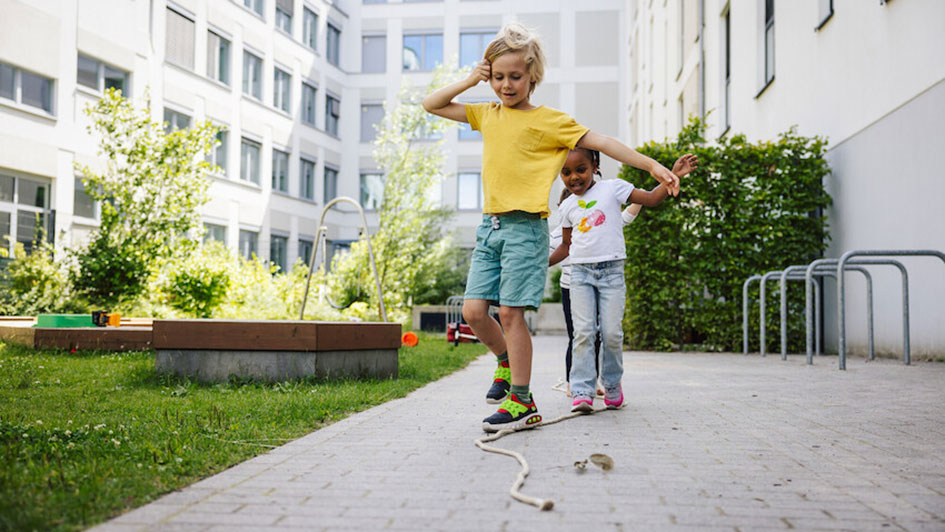
How do children learn to deal with emotions, challenges, and new situations? This is exactly where the StaRK project comes in. Together with Stiftung Kinder forschen and Charité – Universitätsmedizin Berlin, we offer a practice-oriented qualification program for early childhood educators at the MINT-Hub Siemensstadt Square. The goal is to strengthen the self-regulation skills of children aged three to six and thereby lay important foundations for resilience, health, and educational success at an early stage.
Studies show that well-developed self-regulation skills can have long-term positive effects on health, well-being, and social participation. Supporting these skills is especially important for children growing up in socially disadvantaged environments (see, for example, the Dunedin Study).
Over the next two years, new training formats and educational materials for early childhood education will be developed collaboratively with experts from educational practice and academia. The content will be created through a co-creative process and tested directly with early childhood educators.
Workshops will take place, among other locations, at the Siemens Stiftung MINT-Hub in Berlin-Spandau. With its diverse social realities, the region provides an important testing ground for developing effective and needs-based approaches.
The project builds on the call by the German National Academy of Sciences Leopoldina to establish self-regulation skills more firmly as a guiding principle within the German education system.


Our newsletter keeps you informed about our work in the areas of primary care, digitalization, and climate.
Every two to three months, you’ll receive updates on important topics, projects, calls for proposals, training opportunities, and events.
Our newsletter keeps you informed about our work in the areas of primary care, digitalization, and climate.
Every two to three months, you’ll receive updates on important topics, projects, calls for proposals, training opportunities, and events.