

CATALISE
Strengthening the circular economy, preparing businesses for growth
CATALISE supports small and medium-sized enterprises in Kenya, Tanzania, Uganda, and Malawi in further developing their circular economy business models, preparing for investment, and scaling sustainable solutions for plastics, packaging, and e-waste. A particular focus is placed on women-led and women-owned enterprises.
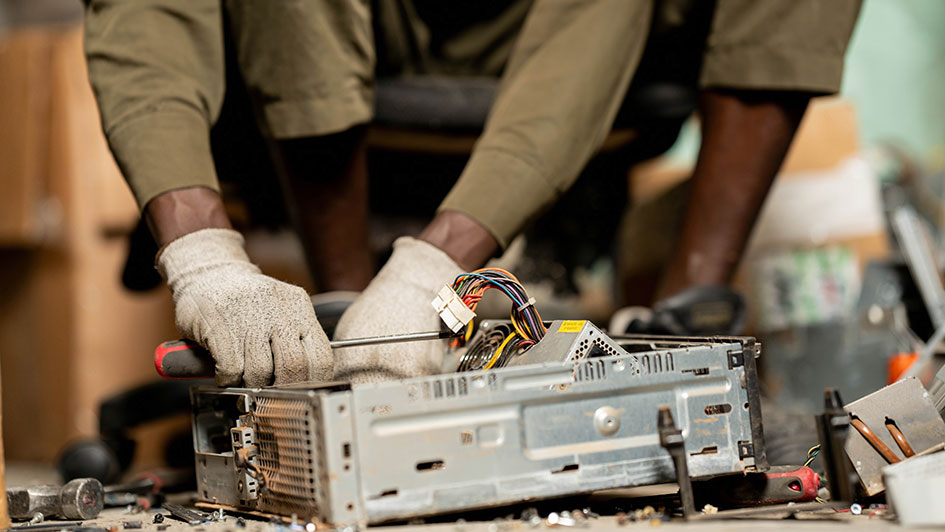
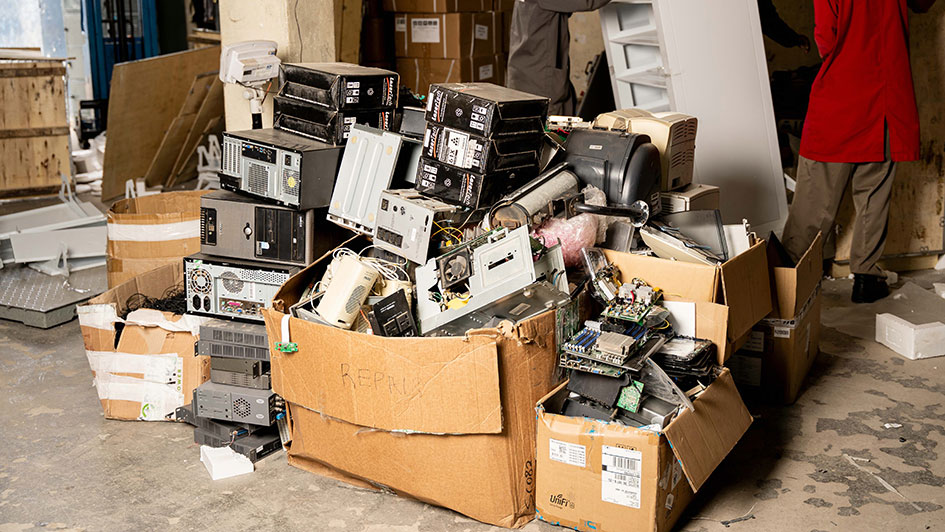
An estimated 17 million tonnes of plastic waste are generated in East and Southern Africa every year. Volumes of plastic and electronic waste are increasing, while adequate systems for collection, reuse, and recycling are often lacking. Linear economic models continue to dominate, placing a burden on the environment and human health – for example through plastic leakage into waterways, open burning, or the improper handling of hazardous e-waste.
Innovative enterprises are already developing solutions for reuse, repair, refurbishment, recycling, and more efficient material cycles. However, they often lack suitable financing, technical and entrepreneurial support, as well as access to markets, investors, and strategic partners. This is where our CATALISE project comes in.
© Siemens Stiftung
Project
Supporting circular economy enterprises on their path to growth
CATALISE creates an integrated support pathway for growth-oriented circular economy enterprises. Over a period of two years, the project will support 20 small and medium-sized enterprises that are already active in the market in Kenya, Tanzania, Uganda, and Malawi. The focus is on business models in the fields of plastics, packaging, and e-waste.
At least 70 percent of the supported enterprises are expected to be women-owned or women-led, helping to increase the visibility of women as founders, technical experts, and entrepreneurs in the circular economy and strengthen their economic opportunities.
CATALISE combines business development with specific circular economy expertise, coaching, technical support, access to networks, and catalytic financing. The aim is to prepare enterprises step by step for sustainable growth and further financing.
20
Circular economy enterprises
4
Countries: Kenya, Tanzania, Uganda, Malawi
980 K
Financing for enterprises in Euro
Approach
From business assessment to investment readiness
The project follows a multi-stage support approach.
The 20 selected enterprises will participate in a Pre-Investment Phase, for which the consortium will develop a modular training and advisory approach. Diagnostics, coaching, and technical advisory services will help identify individual development needs and address them in a targeted way. Each enterprise is also expected to receive a EUR 4,000 Catalytic Readiness Grant to implement concrete improvements and create the conditions for further growth.
At least twelve enterprises are expected to progress to the Investment Phase. They will be eligible for larger grants of between EUR 30,000 and EUR 150,000, linked to clearly defined milestones. At the same time, they will continue to receive coaching and technical advisory support and will be prepared for additional financing.
Following the Investment Phase, a Networking Facility will connect the supported circular economy enterprises with technical experts, market partners, and financing actors, closely linking networking with coaching, diagnostics, and investment readiness. Through the networks of SeedlingHub and the project partners, enterprises will gain access to technology providers, off-takers, research institutions, investors, as well as relevant events and opportunities to showcase their business models.
Partners
Siemens Stiftung is responsible for establishing the grant facility and leading the Investment Phase. The project is implemented jointly with Seedstars, Impact Gateway Africa (IGA), and SeedlingHub. Seedstars is primarily responsible for the Pre-Investment Phase, IGA for developing the curriculum and locally anchoring the project in the target countries, while SeedlingHub contributes technical expertise on circular economy and waste management and manages the Networking Facility.
CATALISE contributes to the SWITCH to Circular Economy in East and Southern Africa programme, funded by the European Commission and the German Federal Ministry for Economic Cooperation and Development and implemented by COMESA, Deutsche Gesellschaft für Internationale Zusammenarbeit (GIZ), and Expertise France.


