
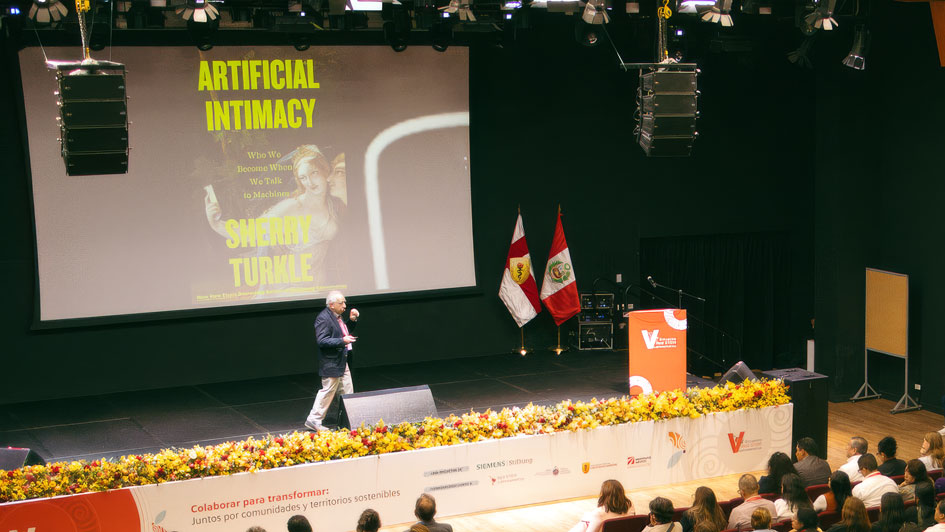


Many of the contemporary leaders behind the world’s most influential technology companies, including the CEO of YouTube, COO of Facebook, and founders of LinkedIn, Salesforce, and Airbnb, did not study computer science. They studied the humanities. Argentine philosopher and digital education expert Alejandro Piscitelli argues that this is no coincidence: “If you don’t understand people, you cannot design products, technologies, or services that truly improve their lives.”
Piscitelli explains that if education systems reward ever-greater specialization, producing graduates equipped with narrow expertise, they may not consider the competencies required to navigate a world defined by uncertainty, complexity, and constant disruption. As artificial intelligence rapidly transforms how we work and learn, the temptation is to see technology as the answer to every challenge. Piscitelli offers an exciting perspective. Rather than competing with AI, education needs to cultivate “polymaths”: Individuals who can connect disciplines, think critically across boundaries, and generate new questions where old answers no longer suffice.
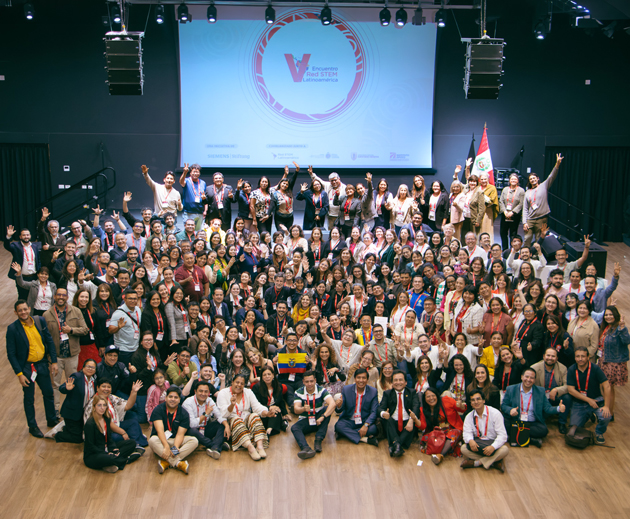
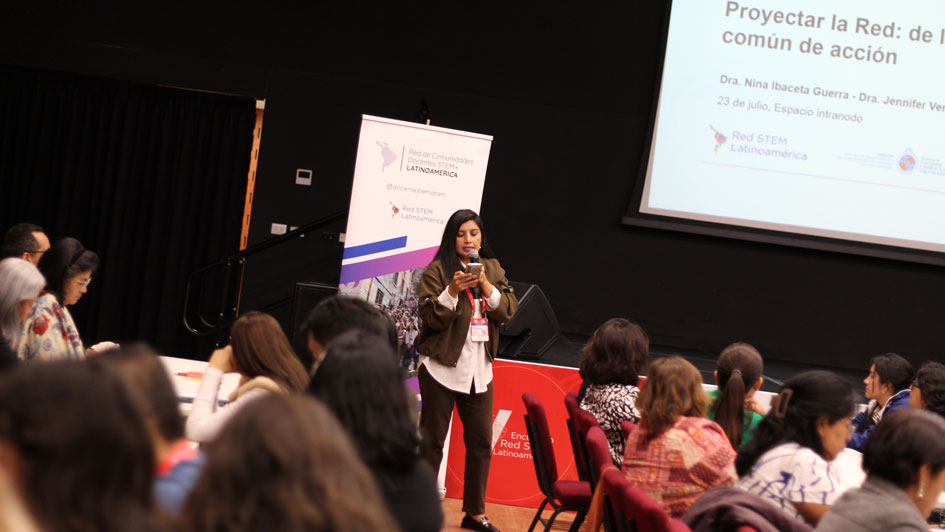
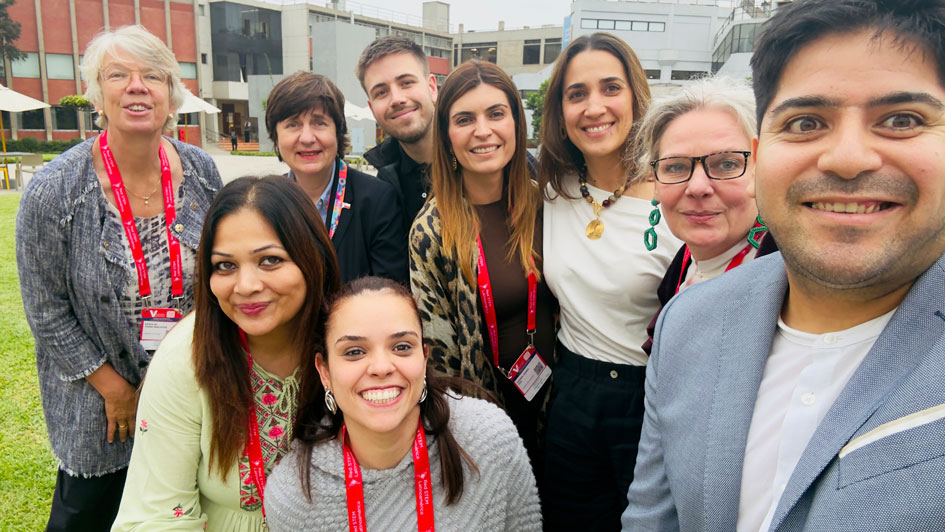
Piscitelli’s vision of education is no longer just a theoretical proposition; it is already taking shape across Latin America through collaborative action. This shared commitment designed the agenda of the V Encuentro of the Red STEM Latinoamérica, held in Lima, Peru, from July 21–23. Initiated by Siemens Stiftung and co-organized with Red STEM Latinoamérica, Instituto Apoyo, Universidad Peruana Cayetano Heredia (UPCH), and CIDSTEM at the Pontificia Universidad Católica de Valparaíso (PUCV), the three-day meeting brought together representatives from universities, schools, research institutions, local and regional education authorities, nonprofit organizations, and international institutions to address education gaps and the future of learning. “Under the theme ‘Collaborate to Transform: Sustainable Communities and Territories,’ the Encuentro is the leading STEM conference in Latin America. It served as a platform for exchanging ideas, strengthening the STEMplus educational approach, and co-creating solutions to the region’s most pressing educational challenges with representatives from more than 200 organizations from 14 countries,” says Ulrike Wahl, Head of Regional Office Latin America.
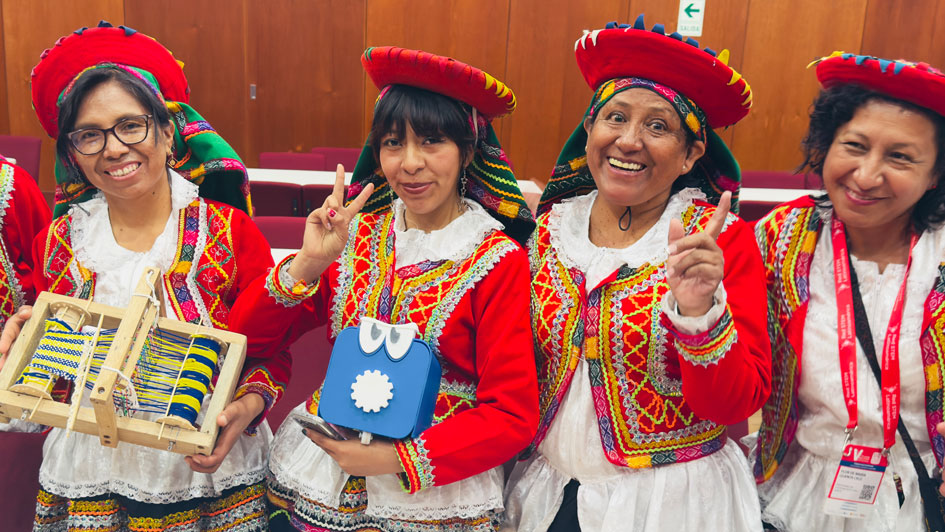
At the same time, the delegates demonstrated that the future of education is far more than AI. Innovation remains deeply rooted in culture, community, and local knowledge. The inspiring session “AWA: Weaving Ancestral Knowledge in Early Childhood Education” illustrated this beautifully. Led by Alexandra Pedraza, it posed the question: How can innovation build on, rather than replace, ancestral knowledge? An early childhood educator and founder of the ONE Education Foundation, Alexandra Pedraza presented a dynamic early childhood STEMplus initiative that adapts ethnocomputing and ethnomathematics to Peruvian traditions, using the patterns and logic of ancestral weaving to introduce mathematical reasoning to children as young as two, without digital devices.
Now implemented across Peru, Colombia, and Chile, the initiative has reached around 2,000 children through 21 community-based projects, with Indigenous-language–speaking grandparents passing on weaving traditions and language as part of the learning process. “When children discover that science, mathematics, and computational thinking already exist within their own culture, they see that innovation does not merely begin with technology, but with their identity and community,” explains Alexandra Pedraza.
Giovanna Danies, Associate Professor at the Faculty of Architecture and Design at Universidad de los Andes, Colombia, and Coordinator of the STEM+ Gender Working Group of Red STEM Latinoamérica, builds on problem–solving skills relevant to local daily contexts through Design Thinking workshops. Her initiative begins by helping students identify challenges in their own communities and asking how previous generations have addressed similar problems. Using the Sustainable Development Goals as a starting point, students develop bio–design solutions inspired by local biodiversity, Indigenous practices, biotechnology, and chemistry. “Our role is to guide students in adapting results to their own culture, environment, and traditional knowledge, demonstrating that local innovation can have regional and even global relevance,” Giovanna Danies adds.
Johans Ríos, instructor in STEM Magic at ATARRAYA STEM Universidad de los Andes, Colombia, combined illusion, theatre, mathematics, and science to demonstrate what he calls “The art of the possible.“ Whether inspired by nature or the wonder of a magic trick, these approaches show that STEMplus education is about empowering young people to imagine creatively to resolve real-world challenges.
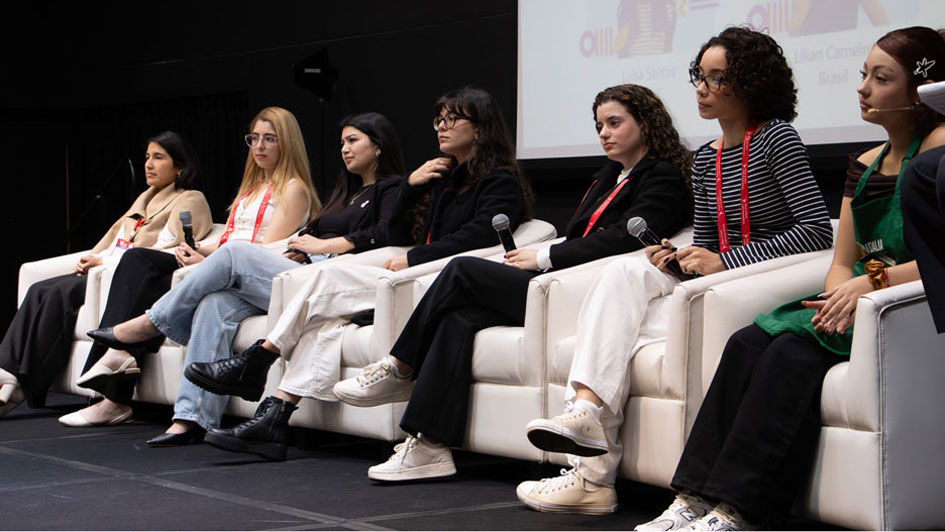
For the first time, the Encuentro gave a platform to young voices at the “Youth Forum: Women Leaders in STEM+ Latin America,” where seven young women from Peru, Brazil, Bolivia, Chile, and Colombia showcased their individual initiatives promoting environmental sustainability, health, and inclusive learning. One of the presenters, Camila Zamora, a 26-year-old paleontologist, highlighted how fossils, as part of Peru’s national heritage, provide invaluable insights into past climate change and the evolution of biodiversity.
Hosted at the Central Campus of UPCH, over 500 people attended in-person, with hundreds more joining online. “It has been a privilege to host representatives from diverse sectors, including teachers, thought leaders, representatives from education, civil society, and the private and public sectors, at our campus,” says Hugo Flores Liñán, STEAM Coordinator, Faculty of Science and Engineering at UPCH.
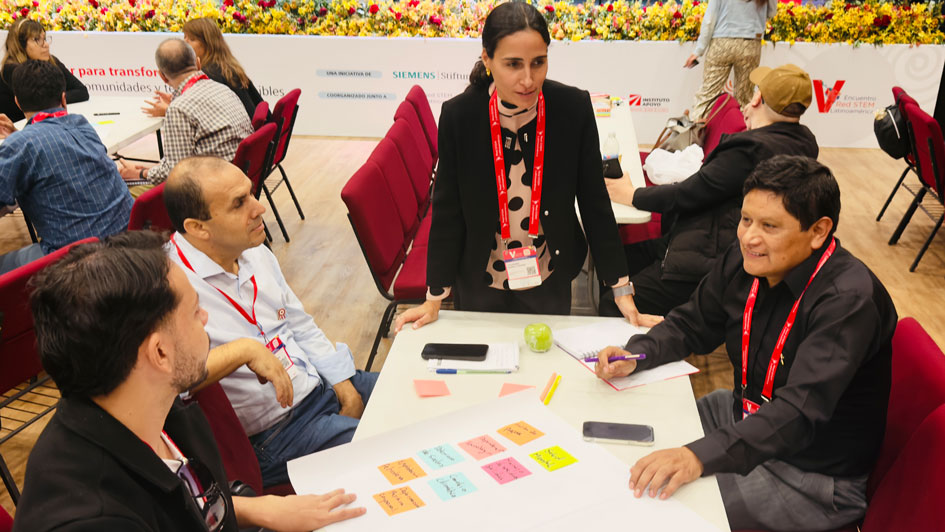
At the heart of the V Encuentro was the “Network of STEM+ Teaching Communities Latin America”, now comprising more than 2,500 educators from across Latin America.160 members of this network travelled to Lima, joining forces with experts from across the education ecosystem to exchange pedagogical knowledge, strengthen professional relationships, and build communities of practice rooted in peer learning and collaboration.
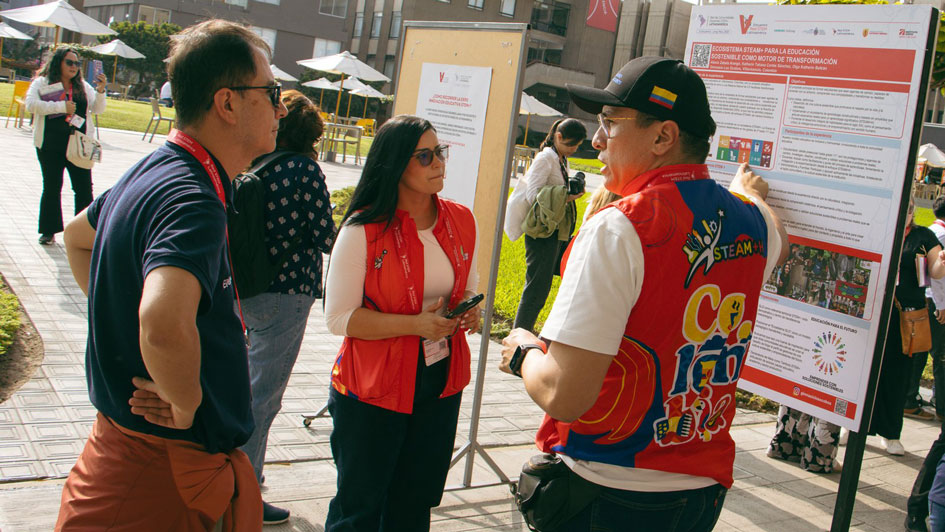
This spirit came to life during the Expo of Educational Innovation, where 52 projects from seven countries showcased how teachers, schools, and partner organizations are implementing the STEMplus approach. More than an exhibition it became a space for dialogue and mutual learning. “Each experience reflected the commitment of educational communities to an education that is relevant, collaborative, and connected to the realities of their students. Innovation becomes truly meaningful when it is shared, discussed, and inspires others,” says Nina Ibaceta Guerra, Coordinator of the teachers’ network, Researcher and Project Coordinator, CIDSTEM at PUCV.
The knowledge and experiences shared throughout the Encuentro became a catalyst for collective action. Representatives from the 56 “STEM+ Territories”, teachers’ communities, thematic working tables, the Regional Education Agenda, more than 70 innovative STEM oriented projects, and 13 collaborative working groups came together. They identified shared priorities for the coming years, including Climate Change Education, health, gender, computational thinking, financial education, early childhood education and Open Educational Resources (OERs). This commitment was reflected in hands-on workshops that explored how creating and adapting teaching materials is not a new practice, but rather a shift toward open educational practices to meet teaching needs and contexts, enabling teachers and students with skills to navigate digitality.
Participants also attended panels on, the relevance of “Health in Education”, focusing on socio–emotional well-being and “Strategic Alliances and Co-financing Models” as crucial elements for sustainable collaboration and collective impact. Additionally, the panel on “Ecosystems, Climate Impacts and Education,” explored how STEMplus and Climate Change Education can strengthen resilience, inspire collective climate action, and connect learning with students’ environmental challenges to co-develop mitigation and adaptation solutions.
The V Encuentro also consolidated the growing regional alliance among the Siemens foundations in Argentina, Brazil, and Colombia and the international Siemens Stiftung. Leaders from the four foundations met to discuss their strategies and deepen synergies around the shared vision for STEMplus as a driver of sustainable development across the region.
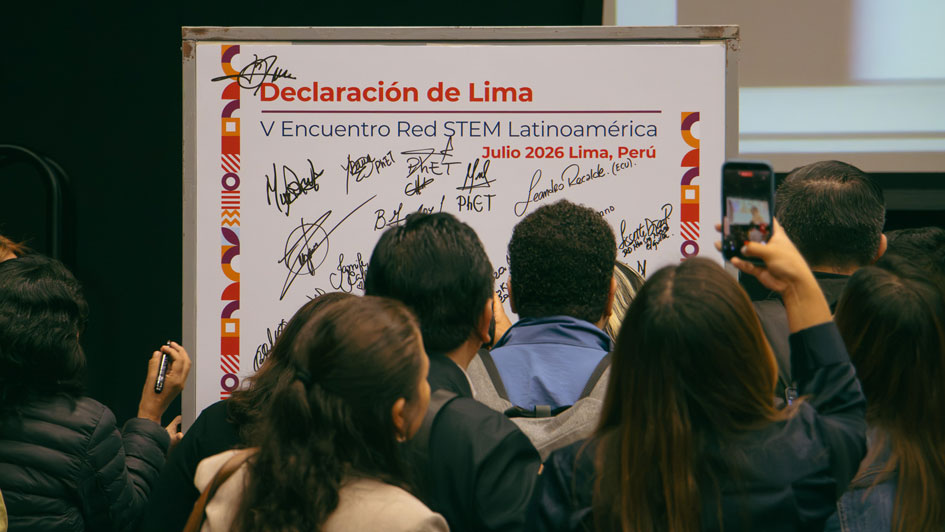
The activities spread over the three days culminated with the Lima Declaration, which charts the next chapter for Red STEM Latinoamérica. The network committed to strengthening its governance model for long-term sustainability, developing an Evidence Lab to measure the impact of STEMplus education, launching a Youth leadership working group, and further developing a regional roadmap and co-funding model, expanding the National STEM+ Agendas in Colombia, Mexico, Bolivia, Chile, and Peru, and welcoming new members from Panama and the Dominican Republic, among others. It reaffirms the network’s overarching goal of developing responsible, empathetic, resilient, and active citizens who contribute to sustainable communities and territories across Latin America, with the STEM+ approach serving as a key driver.
Mayte Morales Arce, Executive Director of Instituto APOYO says: “The implementation of the STEMplus approach in Peru is a reality that inspires hope, providing a strategy for the present with a sustainable vision grounded in citizenship development. The V Encountero demonstrated that more than 500 members of the network are implementing this in their local communities, fostering the development of competencies within schools to solve community-specific problems and contribute to greater well-being.”
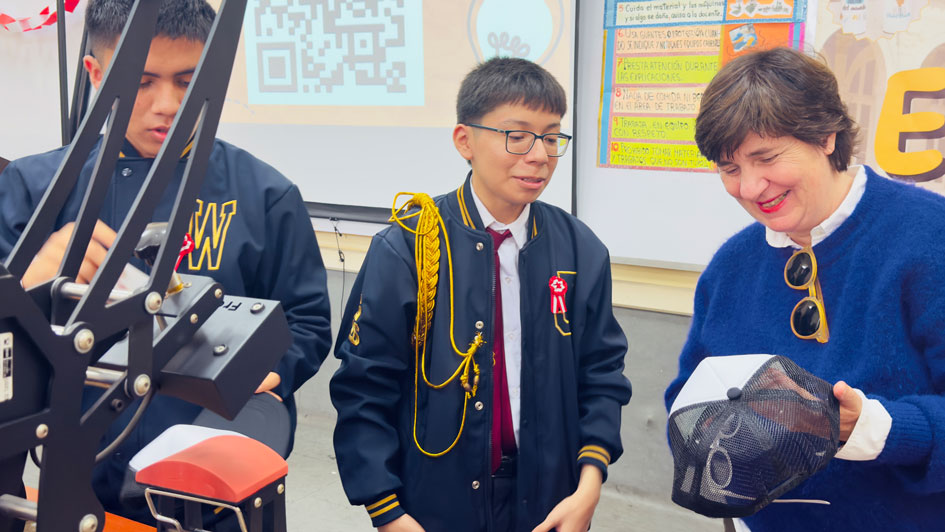
Following the Encuentro, the Regional Authority of Education of Lima invited key network partners to the historic Nuestra Señora de Guadalupe School, one of Peru’s oldest public schools. The teachers shared how STEMplus extends beyond science and technology by integrating history, the humanities, and cultural heritage into inquiry-based learning. Using Peru’s independence and nation-building as a lens, students investigate historical events through scientific inquiry, engineering, mathematics, and analysis, exploring everything from heritage architecture to the role of technology and innovation in understanding the country’s past.
“Witnessing STEMplus come to life in the classrooms was a powerful reminder that when learning is rooted in students’ own history and culture, it becomes more relevant, interdisciplinary, and empowering them to shape the future,” says Dr. Barbara Filtzinger, Head of Education at Siemens Stiftung and co-author of the STEMplus position paper.


Our newsletter keeps you informed about our work in the action areas of Essential Services, Digitality, and Climate.
Every two to three months, you’ll receive updates on important topics, projects, calls for proposals, training opportunities, and events.
Our newsletter keeps you informed about our work in the areas of primary care, digitalization, and climate.
Every two to three months, you’ll receive updates on important topics, projects, calls for proposals, training opportunities, and events.