Water Resilience Solutions Hub
Climate-resilient water supply through innovative solutions and partnerships
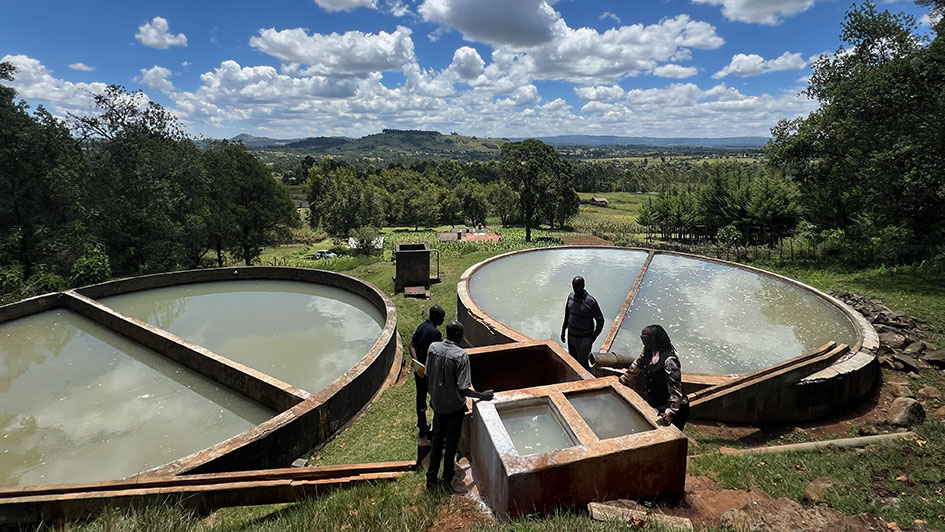
The Water Resilience Solutions Hub brings together water utilities in Kenya and Uganda with innovative WASH enterprises. Together, they develop, test, and establish solutions that make water supply systems more resilient to the impacts of climate change.
Floods, droughts, rising temperatures, landslides, and declining water resource quality are posing growing challenges for water utilities in East Africa. They affect the reliability of service delivery while at the same time increasing operating costs.
The challenge is not necessarily a lack of suitable solutions: WASH enterprises in the region are already developing technologies and business models that can strengthen climate resilience. However, the pressures of day-to-day operations, as well as administrative, financial, and procurement-related barriers, often make it difficult for water utilities to collaborate with companies that develop or offer suitable solutions.
Project
From climate risk assessment to real-world testing
This is where the Water Resilience Solutions Hub (WRSH) comes in, initiated by Siemens Stiftung in 2026 together with cewas and other partner organizations. It creates a structured framework in which water utilities can analyze their specific climate-related challenges and work with suitable WASH enterprises to develop appropriate solutions.
The Hub is not designed as a single technical intervention, but as a repeatable collaboration process: from joint problem analysis and climate risk assessment to matchmaking with suitable enterprises, the development of pilot projects, and ultimately long-term public-private partnerships.
In its first project phase, the Water Resilience Solutions Hub focuses on water utilities in Kenya and Uganda. The project plans to work with four to five municipal utilities, match and coach at least ten WASH enterprises, and implement four to five systematically monitored pilot projects. These collaborations are expected to result in at least three long-term partnerships. In addition, the aim is to secure the expansion of water supply services and ensure long-term follow-up funding.
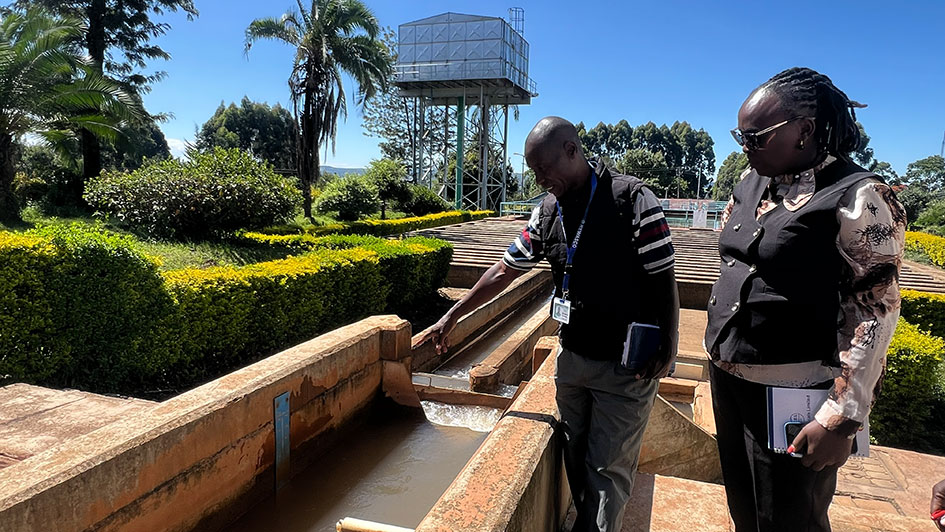
KEWASCO supplies water to around 200,000 people in Kericho County, where climate variability reduces drinking water production by up to 78%.
© Siemens Stiftung
Approach
Bridging the gap between needs, commercial viability, and innovation
The Water Resilience Solutions Hub supports water utilities and enterprises step by step:
- Understand the challenges: Together with the water utilities, specific climate-related risks and their root causes are analyzed.
- Identify suitable collaborations: Relevant WASH enterprises are identified and connected with the utilities.
- Co-develop solutions: Utilities and enterprises jointly design pilot projects tailored to the respective local and operational context.
- Test under real-world conditions: Selected solutions receive financial support, are implemented in day-to-day operations, and are systematically evaluated.
- Build lasting partnerships: Successful approaches are intended to be transformed into long-term collaborations and prepared for further scaling.
Through facilitated collaboration, climate risk assessments, coaching, co-design, and the financing of pilot projects, water utilities are expected to gain confidence in working with innovative solutions. At the same time, WASH enterprises have the opportunity to validate their solutions under real operating conditions and build a solid evidence base for further investment and scaling.
Partners
The Water Resilience Solutions Hub is implemented by cewas, OPERO Services Ltd, and seecon impact. Cewas specializes in promoting entrepreneurship and innovation in the WASH sector. OPERO Services contributes technical and entrepreneurial expertise, particularly from Kenya’s water and wastewater sector. Seecon impact works on sustainable development through co-creation, capacity building, and systemic change.
The Water Resilience Solutions Hub is supported by Siemens Stiftung, the Conrad N. Hilton Foundation, the Shockwave Foundation, and The One Foundation.